Comprehending Peptide Pureness Screening
@riversona903
Chemical & Physical Peptide Analysis
HPLC informs you what proportion of your example is the primary compound-- but it does not confirm what that major compound in fact is. A peak with the best retention time might theoretically be an associated peptide with similar hydrophobicity. Mass spectrometry gives identification confirmation by measuring molecular mass straight. We assess peptide length, sequence composition, anticipated molecular weight, modification type, salt kind, sample history, and designated downstream usage before specifying the logical course.Picking the best external laboratory for peptide screening entails assessing numerous factors. A trusted laboratory must have verifiable experience in peptide chemistry analysis-- for instance, PhD-level drug stores or biochemists on personnel that recognize peptides' synthesis and destruction paths. Accreditation by pertinent bodies (such as ISO/IEC or qualification for GLP/GMP conformity) is a solid indication of top quality.
For scientists, acquiring verified peptides isn't just a rule-- it's the structure of trustworthy experiments and research study reproducibility. Poor-quality peptides (those with undetected impurities, wrong sequences, or weakened components) can cause misleading information and irreproducible results. Actually, healthy proteins and peptides are amongst one of the most commonly used lab reagents, yet researches have actually revealed that their top quality is typically inadequate, causing inadequate data reproducibility. Beginning with appropriate laboratory validation is as a result a vital part of a researcher's quality control Peptide Technology workflow.Third-party Testing Vs In-house Screening
We have the ability of offering customers from early peptide medicine discovery phases to peptide evaluation. We provide all the technological info and instructions for every action of peptide synthesis and analysis. The release process of peptide formulas is intricate, and an absence of clinical information prevents growth. We develop artificial insemination launch designs, offering total release contours and kinetic version analysis to maximize product layout. One of one of the most usual sources of complication in peptide tasks is utilizing different high quality terms as if they mean the very same point.
Types Of Pollutants Hplc Detects
The pureness of peptides is usually checked utilizing high-performance fluid chromatography (HPLC). HPLC divides peptides based on their communications with a stationary phase, permitting contaminations and spin-offs to be recognized and quantified. Furthermore, mass spectrometry (MS) can be made use of to confirm the peptide's molecular weight and sequence, giving additional verification of pureness by identifying pollutants and destruction items. If you have actually ever gotten an artificial peptide for a laboratory experiment, you have actually most likely observed a purity percent on the certificate of analysis-- usually worths like 95%, 98%, or perhaps 99%. Peptide pureness is a vital top quality metric that tells you what portion of a peptide example is the intended product versus unwanted byproducts.BOC Sciences provides detailed peptide testing services to clients throughout sectors, ensuring items meet rigorous market needs and guaranteeing product uniformity, safety, and efficiency. It also supports traceability-- each batch's laboratory validation report can be tied to its COA and regulatory filings, developing a clear paper trail. Simply put, extensive lab validation is exactly how you show to regulatory authorities that your peptide fulfills all quality specs. It assists avoid compliance concerns such as failed audits or product remembers due to quality defects. This not only pleases legal demands however inevitably secures client security.
Notably, this purity figure is generally figured out after filtration (e.g. by HPLC) and concentrates on peptide impurities-- it doesn't count residual water, salts, or counter-ions in the dried peptide powder. To put it simply, the purity percentage is about the make-up of peptide species in the example, not the weight payment of water or salts. A peptide can be 98% pure (indicating extremely couple of peptide pollutants) yet still contain some water or trifluoroacetate salt; those non-peptide elements would be mirrored in the internet peptide content instead Peptide Research of the purity portion. At Creative Peptides, we supply personalized peptide chemical and physical evaluations for research study teams that require reliable information on peptide identity, pureness, make-up, remedy habits, and example high quality. Our solution sustains artificial, customized, cyclic, conjugated, and challenging peptide examples with analytical process developed around the actual job question as opposed to a fixed default panel.What Do Purity Levels 95%, 98%, 99% Mean?
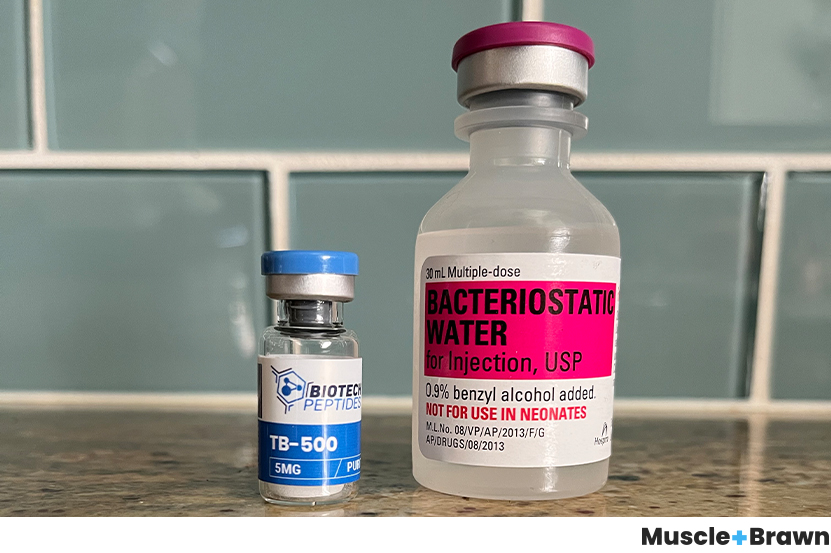
- This overview breaks down what pureness actually indicates in peptide chemistry, how it's determined, what the pollutants are, and how to review the documents that shows a peptide is what it asserts to be.
- HPLC separates a mix into its specific elements based on exactly how each molecule communicates with a particularly developed column.
- For examples of product-level context, contrast the expected masses for Retatrutide, BPC-157, and Semaglutide.